
FLOW CONTROL / Mining & slurry

Mining & slurry.

Slurry and mineral-processing duties introduce particle wear and the risk of buildup. Solids concentration, particle size and the required shut-off direction matter to selection.

Discuss your application
Illustrative application context
ILLUSTRATIVE APPLICATION CONTEXT

Different duties.
Different demands.

Mining duties range from liquid slurries to dry or damp solids, and those services should not be grouped under one generic valve selection. Describe the material, concentration, particle characteristics and operating sequence so the flow path, wear surfaces and shut-off arrangement can be reviewed for the actual duty.

DUTY / 01

Solids-bearing transfer isolation

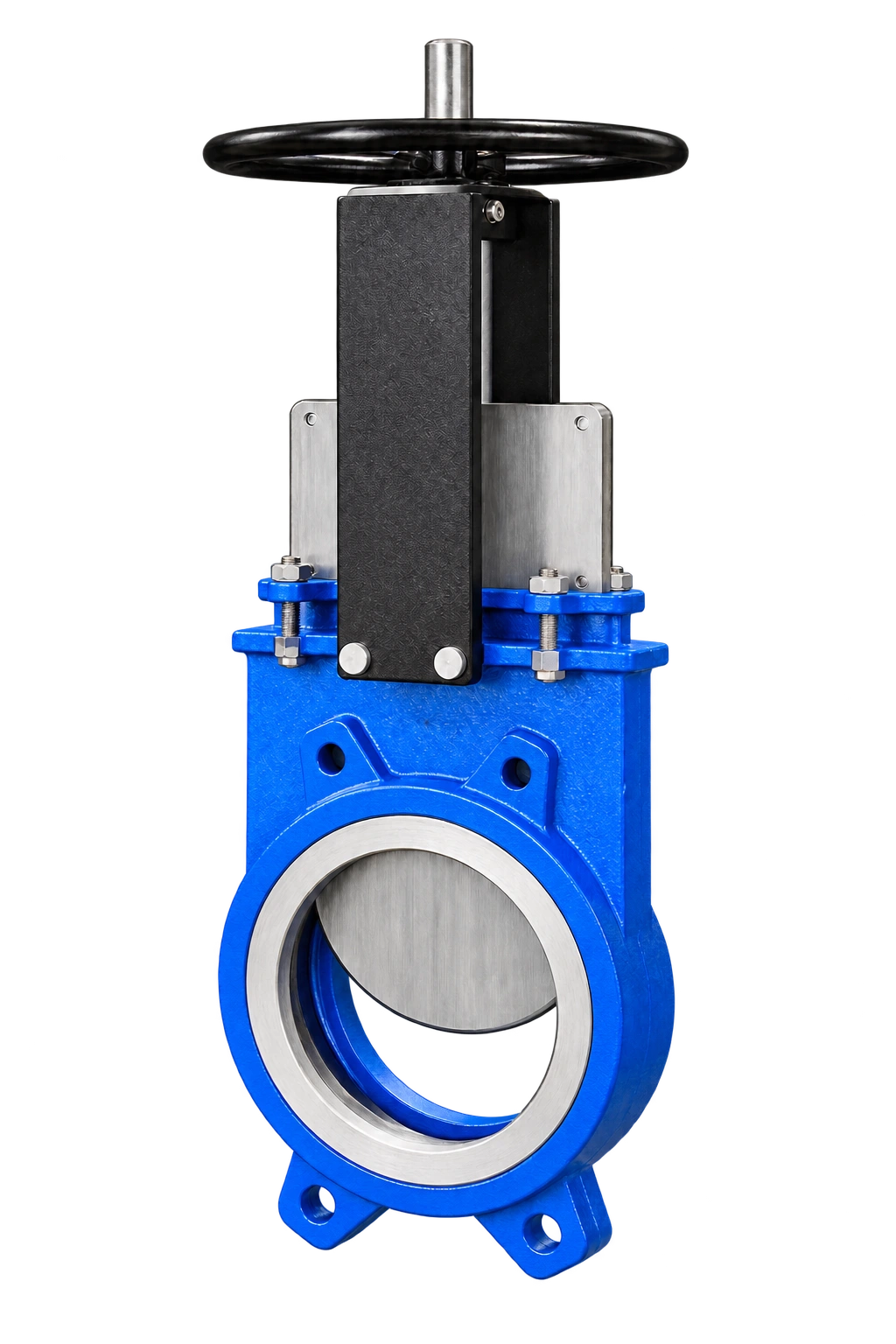
Wafer or lug knife-gate options can be reviewed for a defined transfer-line duty. Specify the solids percentage, particle size, abrasiveness and pressure direction so the team can assess the seat and gate arrangement; a general knife gate is not automatically a severe-slurry valve.
DUTY / 02

Pipeline and installation fit

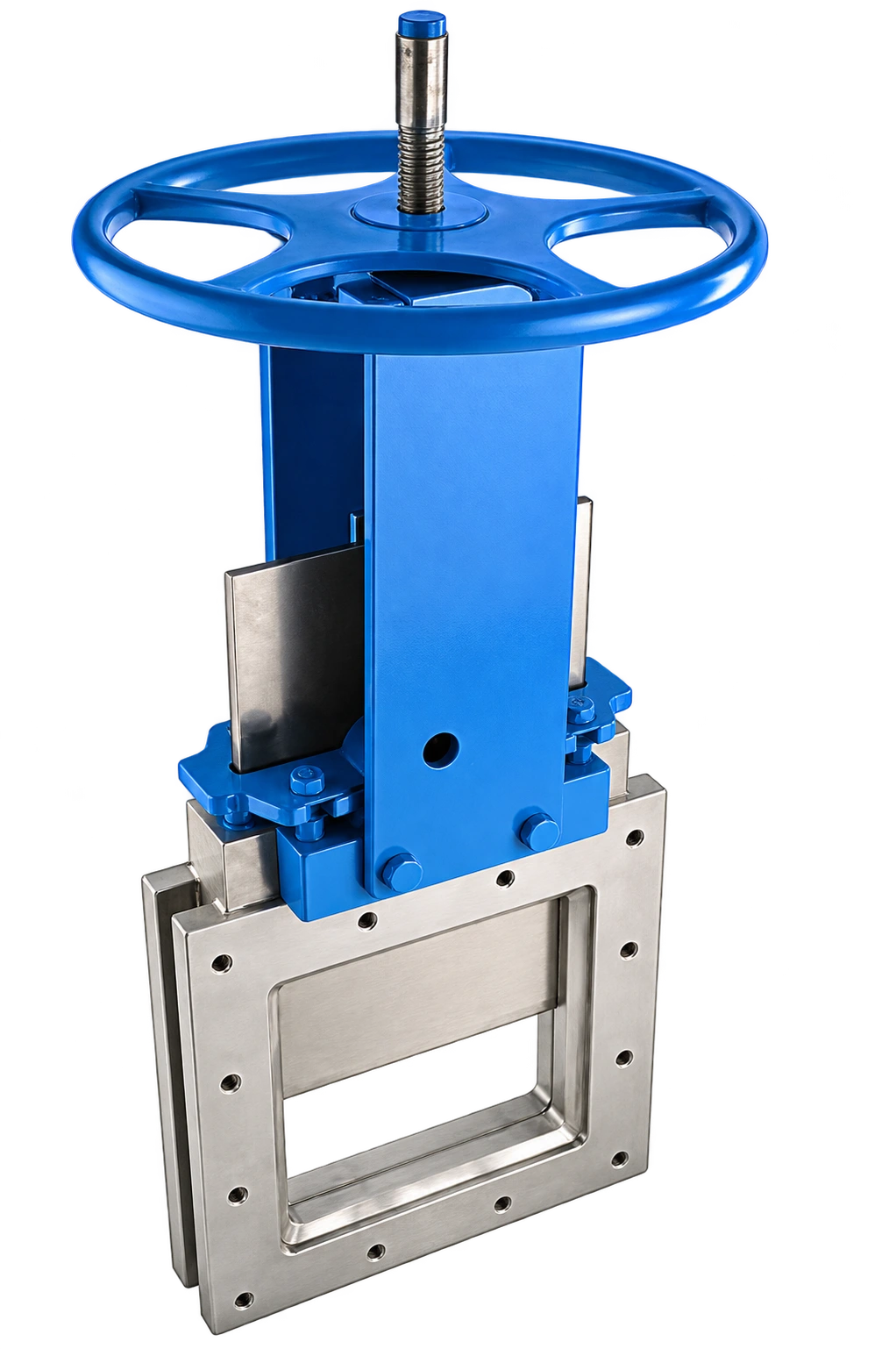
A fabricated knife-gate option is a starting point for discussing the connection and installation requirements of a solids-bearing line. Provide the available dimensions, access and operating conditions before confirming the construction; a fabricated body alone does not establish abrasion resistance or bidirectional shut-off.

DUTY / 03

Specialist material-discharge review

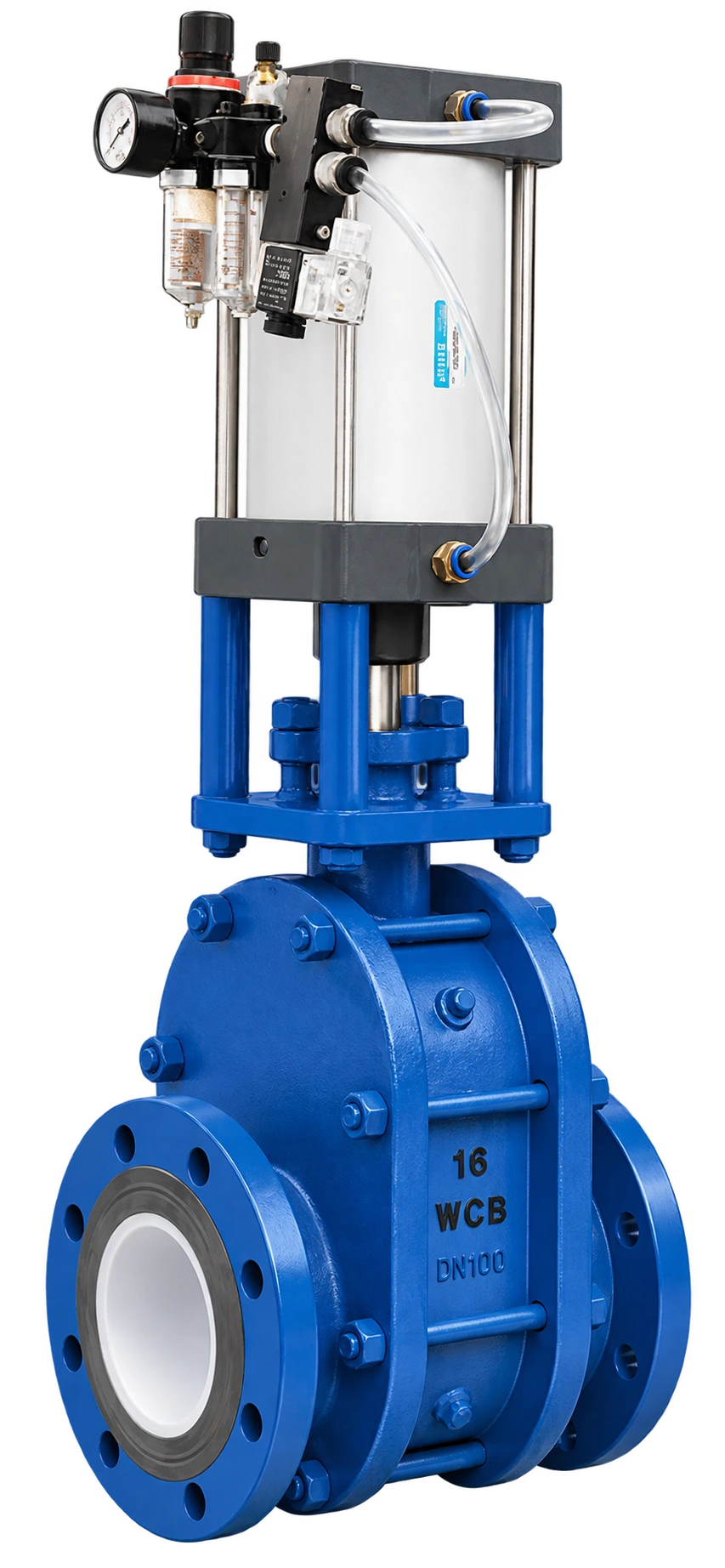
Where a separate bulk-material discharge duty is involved, discuss the catalogue's pneumatically operated ceramic double-gate option. Identify whether the material is dry, damp or suspended in liquid, and confirm the wear, particle and operating requirements rather than assuming the design suits a slurry pipeline.

SELECTION / LOOK BEYOND LINE SIZE

What the process
asks of the valve.

01

Abrasive wear has several drivers

Solids concentration, particle size, hardness and velocity influence the service. Include these characteristics and any operating changes so wear-sensitive parts can be discussed with more useful information than the word slurry alone.

02

Buildup can change the closing duty

Describe settling, packing or accumulated material encountered during shutdown. The operating sequence and previous failure pattern help the team review whether the flow path and sealing arrangement suit the application.

03

Maintenance needs practical space

A valve may be accessible when open yet difficult to service once surrounded by pipework. Share the installation drawing, required removal route and planned maintenance approach before the dimensions and actuation are finalised.

Materials and operation.
The complete assembly.

Body, trim, seals and actuation need to work together under your service conditions.

Distinguish wear from corrosion

A slurry can create mechanical wear and chemical attack at the same time. Give the liquid chemistry as well as the solids data, then review body, gate, seat and packing materials for the combined conditions.

Confirm the required sealing direction

Forward pressure and reverse pressure may affect a knife gate differently. State whether pressure can appear on either side and ask for the selected configuration's shut-off direction and performance to be confirmed.

Specify the operating package

Actuation needs to be assessed against the real closing load and cycle pattern. Share air or power availability, local conditions and required feedback, then confirm the suitable operating arrangement and maintenance provisions with the quoted assembly.

Explore the valves
behind the application.

Explore these catalogue configurations, compare their specifications and share your operating conditions with our team.

Knife Edge Gate ValvesPV / 002
Fabricated Knife Edge Gate Valve

Discuss a fabricated configuration for the application.

Fabricated Knife Edge Gate Valve

Size Range: 40mm to 1000mm. Pressure Rating: PN10/ PN16.

Final selection depends on the complete valve configuration, fluid compatibility and operating duty. Project-specific approvals and limits are confirmed with the quotation.

Is every knife gate suitable for mining slurry?

No. General industrial and specialist slurry designs can differ in their flow path, seats and handling of solids. Provide the material and operating data so the exact configuration can be reviewed. The catalogue listing is a starting point for that discussion.

What information is most useful when an existing valve wears quickly?

Send photographs and the valve specification, plus solids concentration, particle sizes, chemistry, flow and cycle frequency. Describe which part wears or jams and when it happens. This helps distinguish a material problem from a flow-path or operating-duty mismatch.

Can the ceramic double-gate option replace a slurry-line valve?

That needs a specific review. State the material's physical form and discharge conditions, and request confirmation of the quoted design's intended service. Ceramic construction alone does not establish compatibility with a pressurised liquid-slurry line or every abrasive duty.

Let’s review
your application.

Share the medium, duty, size, connections and operating conditions.

Send the application brief

↑ ↓ to navigate · Enter to open · Esc to close

Company-supplied ISO certificate

Prestige Valves ISO 9001:2015 certificate

Certificate QCC/1902/0725 · issued 2 July 2025 · valid until 1 July 2028.